
Milton Directory Runs by Era
Milton city directory research starts with a mixed shelf, not a city-only series. The present city began in 2006, long after most printed directories began, so the best runs are Fulton County and Atlanta suburban works. Central Library Special Collections holds the physical books. Digital Library of Georgia, Emory, and Internet Archive supply selected older Atlanta volumes, but a hit in an Atlanta book does not prove that rural north Fulton was covered. The table separates what is known from what must be checked in person.
| Directory source | Local span | Repository | How to use it |
|---|---|---|---|
| Atlanta city directories | 1859-60 to 1991 | Fulton Central Special Collections | Walk-in; earliest physical call is 1867 |
| Atlanta suburban directories | 1953-1986 | Fulton Central Special Collections | Walk-in; strong north Fulton run |
| Haines criss-cross | 1946-2016/17 | Fulton Central Special Collections | Walk-in, address-first search |
| Digitized Atlanta volumes | 1867-1922 umbrella range | DLG, Emory, Internet Archive | Selected years online |
| Federal census | Public through 1950 | NARA and library databases | Households by census geography |
No official online list names every publisher and volume in the suburban run. Email the library before traveling and ask staff to pull the years tied to the address. That small step also confirms whether a missing year is a true shelf gap or merely absent from the web catalog.
Milton Research at Central Library
The Fulton County Library System keeps every physical directory in Central Library Special Collections at 1 Margaret Mitchell Square NW in Atlanta. The desk is reached at 404-612-8700 or Library.SpecColl@fultoncountyga.gov. Ask for the Atlanta suburban run at call number 917.581 ATLANTA and the Haines volumes for the target address and year. Staff help matters because a Milton-area household may be filed under Alpharetta or unincorporated Fulton rather than the modern city name.
The Fulton genealogy collection also describes census microfilm, maps, newspapers, cemetery material, and family histories that sit beside the books.
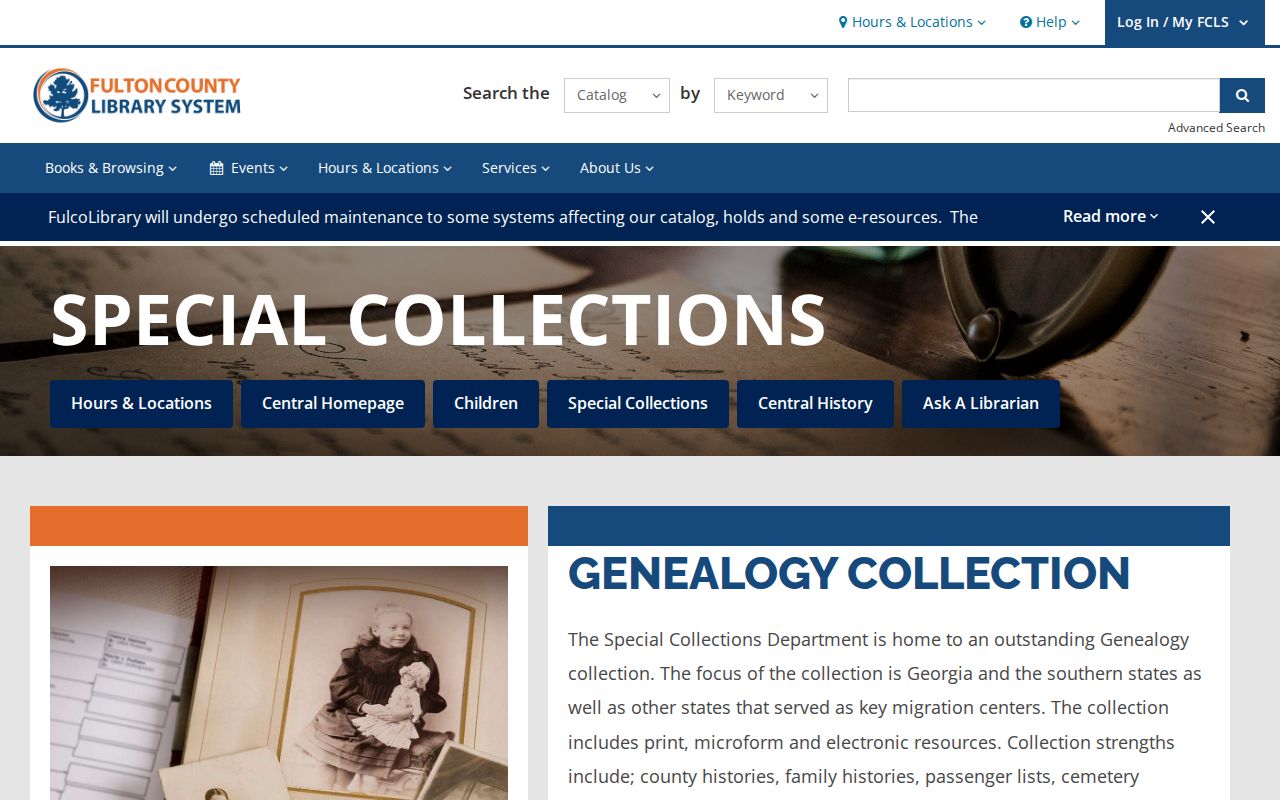
The captured library page shows why a directory entry should be checked against more than one local-history source.
Reading Milton Directory Entries
A city directory line compresses several facts. An authoritative Georgia R.L. Polk sample shows the standard pattern, though it is not an inspected Milton entry. Begin with the alphabetical name section, then turn to the street or householder section. Photograph the title page and abbreviation key with the entry. Those pages identify the edition, explain marks, and prevent a short code from becoming a false family fact.
| Resident name | Alphabetical entry, sometimes with a spouse in parentheses |
|---|---|
| Work line | Occupation and, in some editions, employer or business |
| Printed address | House number, road, and codes for residence or boarding |
| Tenure mark | A symbol may distinguish an owner from a renter |
| Widow mark | Often names or initials the deceased spouse |
- Criss-cross directory
- An address-first book arranged by street and house number rather than surname.
- Householder index
- The street-order part of a volume, useful when the address is known but the name is not.
- Abbreviation key
- The edition's own list of shortened names, trades, street types, and household marks.
Milton Addresses in Haines
Haines criss-cross books span 1946 through 2016/17 at Central Library. That makes them the chief walk-in fallback for an address-first city directory search. Start with a street and number, note the listed occupant and phone indicator, then compare the owner or renter mark where present. An owner and occupant can differ, so deeds should confirm title while the book supports presence at the address.
This run outlasted printed Atlanta city directories, which ended in 1991. It also reaches beyond the suburban set that ends in 1986. Still, a blank line is not proof that the home stood vacant. New roads, changed numbers, unlisted phones, and uneven rural coverage can all hide a household.
Insider tip. Bring every known form of the road name and ask staff for the editions immediately before and after the target year.
Digital Milton Directory Limits
Online directory access is useful but partial. The Digital Library of Georgia includes examples from 1878, 1896-99, 1902-04, and 1907-08 within a broader 1867-1922 Atlanta range. One 1898 volume credits V. V. Bullock and Mrs. F. A. Saunders. These scans can teach search mechanics, spelling habits, and period abbreviations. They cannot stand in for a Milton-area entry unless the actual image names the person and place.
The Fulton genealogy database list explains access to Ancestry Library Edition, Fold3, MyHeritage, and obituary tools.
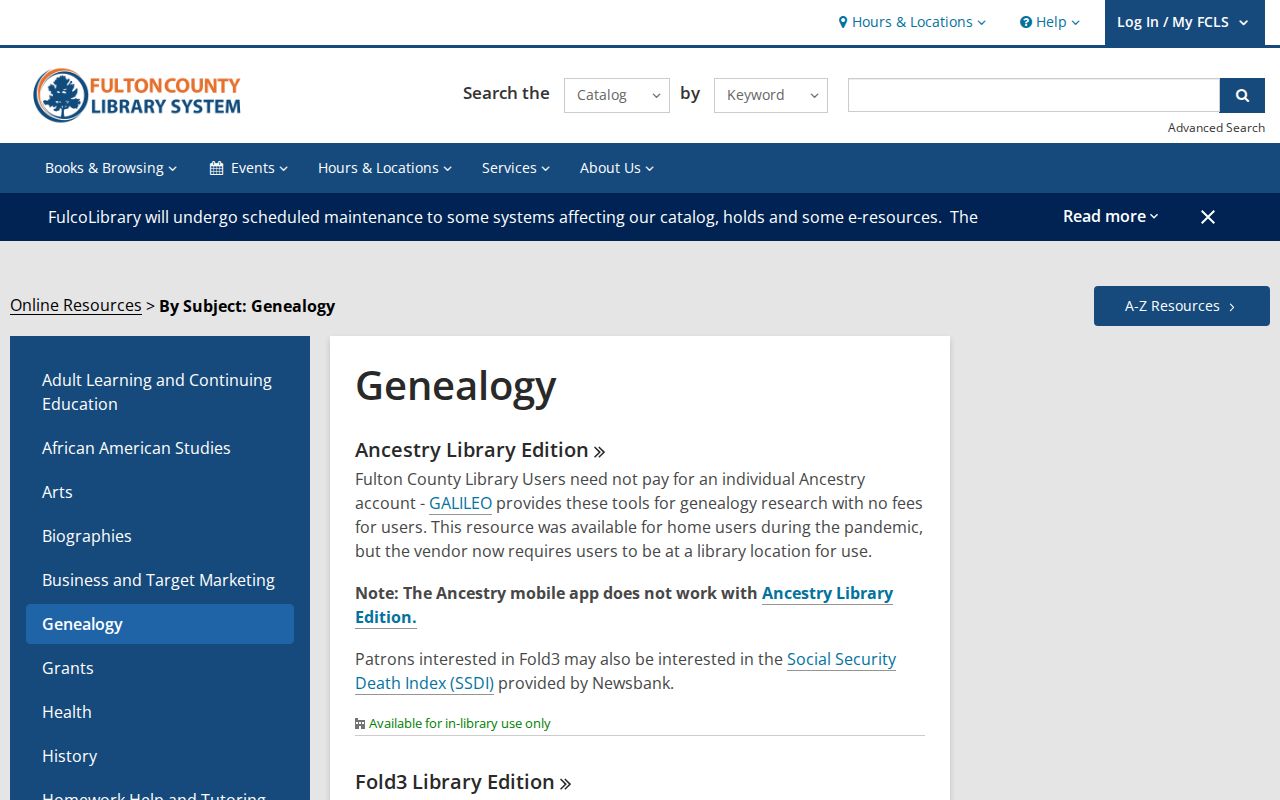
The library screen helps distinguish in-library databases from tools that may work with a valid card off site.
Milton Names Across Four Jurisdictions
The word Milton means two different places in historical records. Present-day city files cannot predate incorporation in December 2006. Former Milton County existed from 1857 until it merged into Fulton on January 1, 1932. Before 1857, search Cherokee and other predecessor county headings. After the merger, a north Fulton home may still use an Alpharetta postal name.
The Fulton communities bibliography points to books such as Alpharetta, Milton County: The Early Years and the Atlanta suburban directories.
That bibliography supplies the cross-reference needed when a catalog search under the modern city name comes up empty.
Georgia Archives Fills Milton Gaps
Early rural households often fall outside urban city directories. Georgia Archives is the main state fallback for county microfilm, church and cemetery leads, and pre-1900 Superior or Probate material. FamilySearch catalog 250778 identifies Milton will Books A-C for 1865-1932 and 1936, plus a combined Campbell, Milton, and Fulton index for 1833-1948. Wills and estate files can name heirs, executors, married daughters, guardians, and property when a printed volume stays silent.
The Georgia Archives landing page is the lead-in for catalog and visit information.
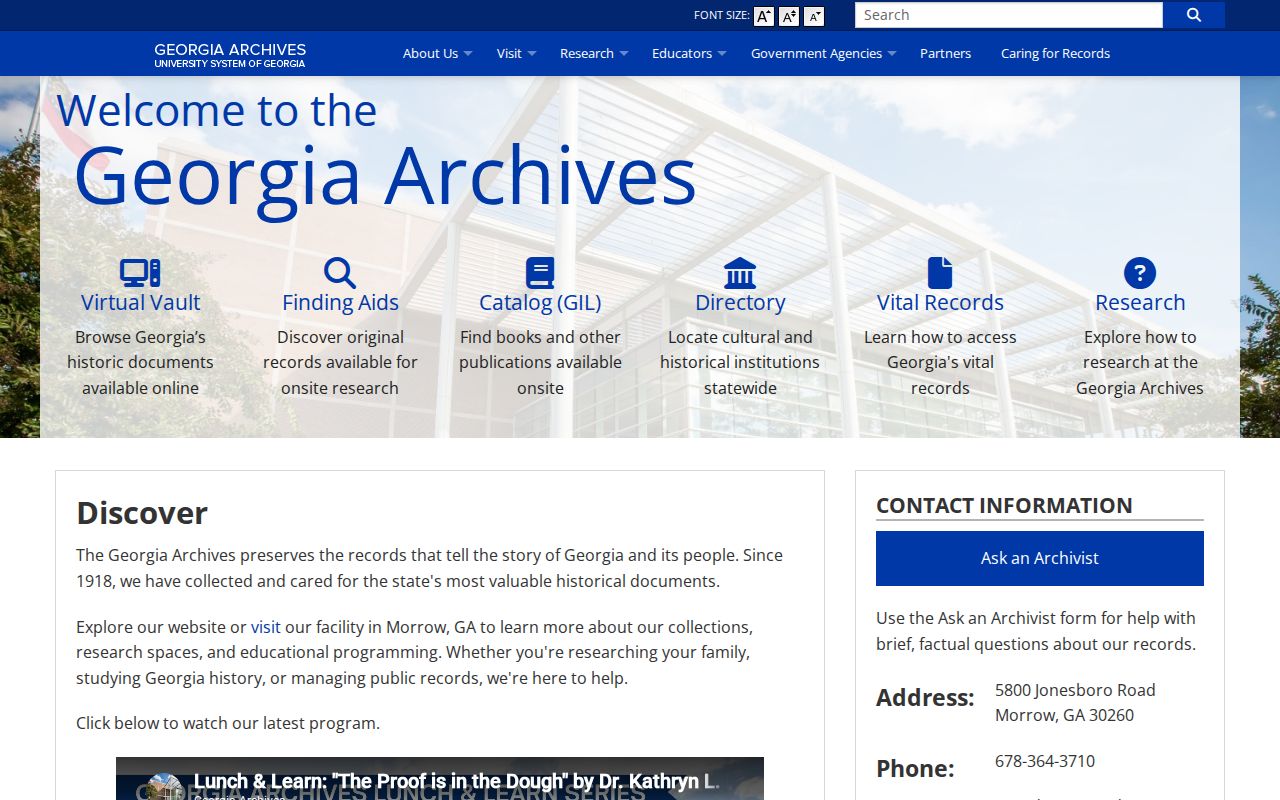
The archive view reinforces the need to search the county name used when the record was made.
Milton Directory Research Timeline
Publication and jurisdiction changed in layers. A short timeline keeps the search in the right catalog and prevents a web gap from being read as a missing resident.
| 1857 | Milton County was created with Alpharetta as county seat. |
|---|---|
| 1932 | Milton County merged into Fulton County. |
| 1946 | The held Haines criss-cross run begins. |
| 1953 | The Atlanta suburban directory run begins. |
| 1991 | Printed Atlanta city directories end. |
| 2006 | The City of Milton was incorporated. |
| 2016/17 | The held Haines run ends. |
The nationally destroyed 1890 census is another known gap. Deeds, tax digests, probate, newspapers, churches, cemeteries, and any surviving directory can bridge it.
Trace Milton Families Across Directories
A city directory works best as a dated checkpoint. Choose the correct historical heading, save the full citation, then build outward. The federal census is public through 1950 under the 72-year rule and adds ages, birthplaces, family ties, and occupations. Deeds, probate, obituaries, and cemetery sources test whether a change between books reflects a move, death, omission, or new street label.
- Search the surname in a suburban volume under the period place name.
- Copy the address, spouse, work line, phone mark, and exact abbreviation.
- Compare the prior and next editions, then check Haines by address.
- Pair the directory checkpoint with the nearest available census sheet.
- Test the result against a deed, will, obituary, church, or cemetery source.
Do not modernize the jurisdiction in notes. Record exactly what the source prints. A family on a road later absorbed into Milton may remain under Alpharetta or Fulton for decades. That label is evidence about the record system, not proof that the property moved.