
Milton Address History by Era
Previous residents of a Milton address leave different traces in each era. Deeds name parties to a transfer, not all occupants. Haines books work in the other direction, placing a listed person at a street address without proving ownership. Census and probate records add family ties, while permits and plats explain why an old address may no longer match the present parcel. Start with the newest reliable record and move backward one link at a time.
| Address source | Known span | Custodian | Evidence gained |
|---|---|---|---|
| Fulton physical deeds | Early 1800s-present | Fulton Deeds Room | Ownership and legal chain |
| GSCCCA deed index | Guaranteed 1999-present; earlier varies | Online account | Parties, type, date, book/page |
| Haines criss-cross | 1946-2016/17 | Fulton Central Library | Listed occupant by address |
| Atlanta suburban directories | 1953-1986 | Fulton Central Library | North Fulton names and addresses |
| Federal census | Public through 1950 | NARA and library databases | Household, age, birthplace, work |
| Milton city records | December 2006-present | City portals and Clerk | Permit, code, and plan context |
For a recent home, begin with the assessor and current deed. For a mid-century occupant, move from the parcel into Haines and suburban volumes. Before numbered roads became common, carry the land lot, district, subdivision, lot, block, and plat into deeds, tax, probate, and census work.
Start Milton Previous Residents by PIN
The Fulton assessor can return owner, situs address, tax-mailing address, parcel identifier, acreage, subdivision, lot, block, and value fields. Situs means the physical property address. Mailing means where tax notices go. They can be the same, but neither field alone proves who lived there. Save the parcel identification number, or PIN, and legal description before looking for names in older sources.
Milton's large rural parcels make map logic especially important. A later subdivision can split one old tract into many homes, while an assemblage can join several lots. The current street number may cover only the newest stage of that land history. Use parcel geometry and recorded plats to keep the chain tied to the same ground.
Walk Fulton Deeds Backward
Past residents are easier to place after the ownership chain is sound. Search Fulton in GSCCCA and find the current owner's purchase deed. The grantee is the buyer; the grantor is the seller. Record both roles, the instrument type, recording date, deed book and page, and every legal property key. Then search that seller as a grantee in an earlier date range. This repeated role switch is the core backward method.
- Copy the present owner, PIN, and legal description from the assessor record.
- Find that owner's purchase in the GSCCCA Fulton real-estate index.
- Save the seller, date, type, land lot, district, plat, book, and page.
- Search the seller as an earlier buyer and repeat the same fields.
- At an online gap, use the Fulton Deeds Room books and public computers.
- Grantor and grantee
- The grantor transfers an interest; the grantee receives it.
- Chain of title
- The linked sequence of recorded transfers for the same land.
- Legal description
- Land lot, district, subdivision, lot, block, and plat details that endure when a street label changes.
When Milton Deed Search Stops
GSCCCA guarantees statewide real-estate indexing from 1999 forward, with older additions that vary. It is an account service, and the Clerk reports a $5 single-use option for four consecutive hours. Online images and prints may add fees. A missing old deed does not end the trail.
Fulton County's Deeds and Records Room keeps instruments from the early 1800s and offers public research computers and books at the Lewis R. Slaton Courthouse, 136 Pryor Street SW in Atlanta. The North Service Center at 7741 Roswell Road is closer to Milton, though hours and services differ. Staff will explain procedure but will not perform legal research by phone.
The Fulton plats and land records page identifies the recorded-document route.
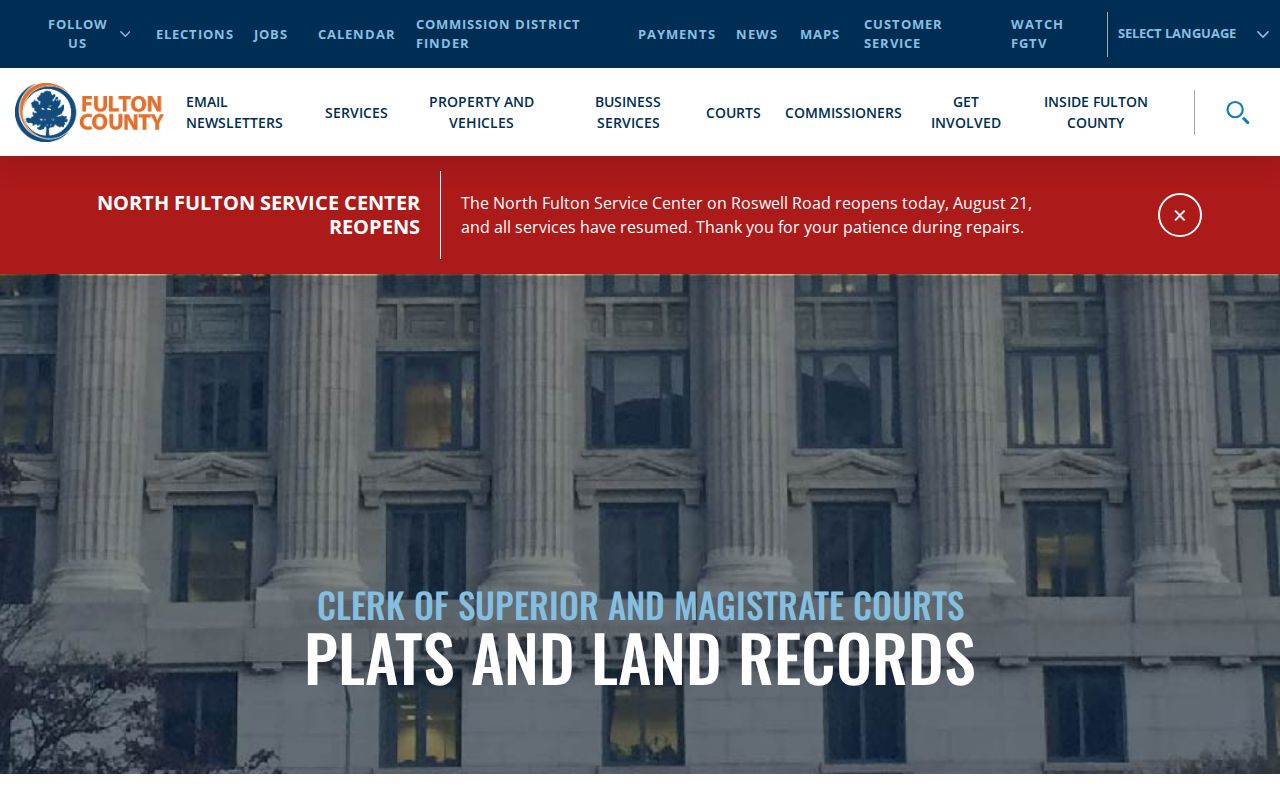
The page confirms that plats and land records belong in the chain when parcel lines or subdivision labels change.
Haines Finds Past Milton Occupants
A deed chain answers who held title. It does not list each person at the home. Haines criss-cross directories cover 1946 through 2016/17 at Fulton Central Library Special Collections and arrange entries by street address. Compare several editions, copy the listed occupant and phone mark, and note any owner or renter symbol. Atlanta suburban directories from 1953 to 1986 give a second name-first route for north Fulton.
The current city name can mislead. An address may appear under Alpharetta, unincorporated Fulton, or the former county context even when the land is now in Milton. The full directory holdings are explained on the Milton city directories page. An absent entry may mean a changed number, unlisted phone, rural coverage gap, death, or move, so it cannot be treated as proof of vacancy.
Insider tip. Search the seller as an earlier buyer, and keep the land lot and district when street indexing fails.
Pair Milton Directories With Census
The federal census supplies household ties that city directories can compress or omit. Public schedules now extend through 1950 under the 72-year release rule. Choose the census geography used at that date, then compare names, ages, birthplaces, occupations, and nearby households with the closest directory editions.
The National Archives census research page explains federal access and release limits.
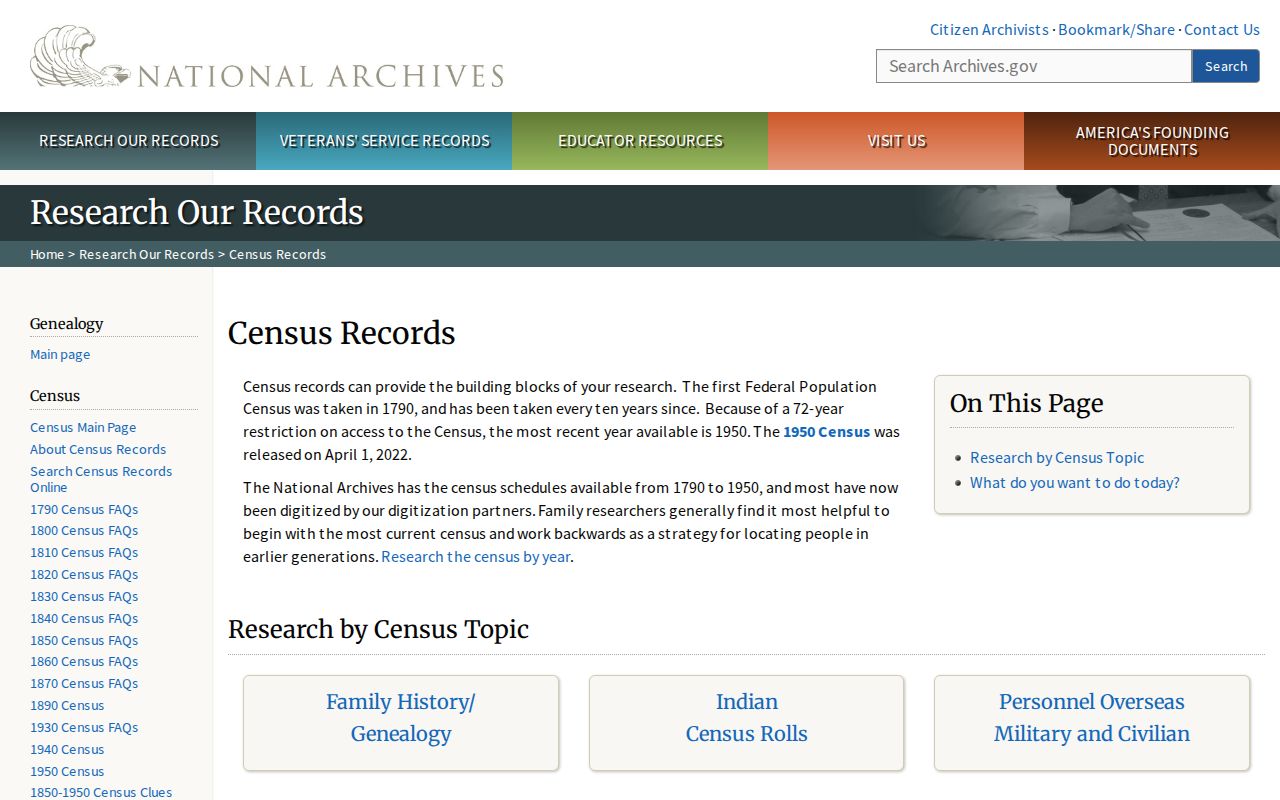
The federal guidance makes clear why no later household census can yet fill a modern address trail.
- Bracket the household with directory editions before and after a census year.
- Search the period county or enumeration area, not only modern Milton.
- Compare the address, family names, ages, work, and nearby households.
- Resolve conflicts with deeds, probate, newspapers, churches, and cemeteries.
Milton Plats Explain Address Changes
Milton municipal records begin in December 2006. CityView and Milton On Demand can add permit type, status, dates, plats, active permits, rezoning, and other parcel context. They can date a major change, but an applicant is not always an occupant. Older or missing city-era files can be requested from the City Clerk under the Georgia Open Records Act.
Before cityhood, use Fulton sources. Before the 1932 county merger, search Milton County. Before 1857, check predecessor counties. The 1832 land-lottery legacy also makes land lots and districts more stable than a modern road number in early deeds. No verified citywide street-renumbering year was found, so never invent one to explain a mismatch.
Probate Closes Milton Resident Trails
A deed trail may end because an owner died rather than sold. Milton County will Books A-C survive for 1865-1932 and 1936, and a combined Campbell, Milton, and Fulton probate index covers 1833-1948. Estate papers can identify heirs, executors, married daughters, guardians, and land. Obituaries, cemetery records, and church files can then show where family members went.
The official Georgia Adoption Reunion Registry is a separate, consent-based path for eligible family reconnection, not an open resident index. The registry information page sets out that official route.
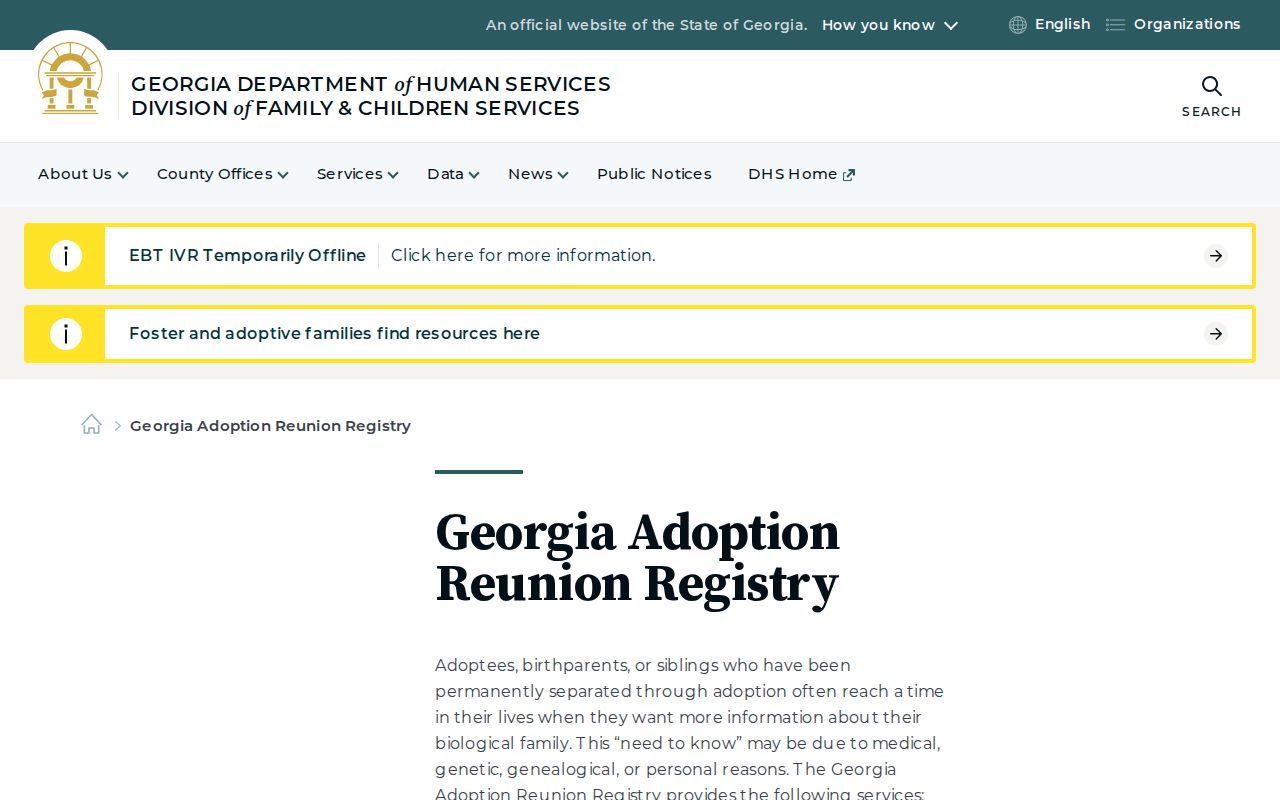
The program shows why sensitive family searches should use the state process rather than trying to infer a living person's address.
Confirm Milton Previous Residents
Previous residents should be confirmed through two sources that answer different questions. A deed plus a tax roll supports title. A Haines entry plus a census or obituary supports occupancy or family connection. A permit adds a dated event at the property. None of them, standing alone, produces a full household list.
Watch for the Milton, Florida Sanborn trap. No standalone Milton, Georgia Sanborn fire-insurance edition was verified. Use Fulton library maps, plats, deeds, permits, and parcel records instead. Likewise, the nationally lost 1890 census is a known federal gap, not proof that local records burned. Tax digests, deeds, probate, newspapers, churches, and cemetery sources can bridge that period.
Lawful use. Research past residents for house history, genealogy, and personal curiosity. Never use an address trail to stalk, harass, or harm a living person.